
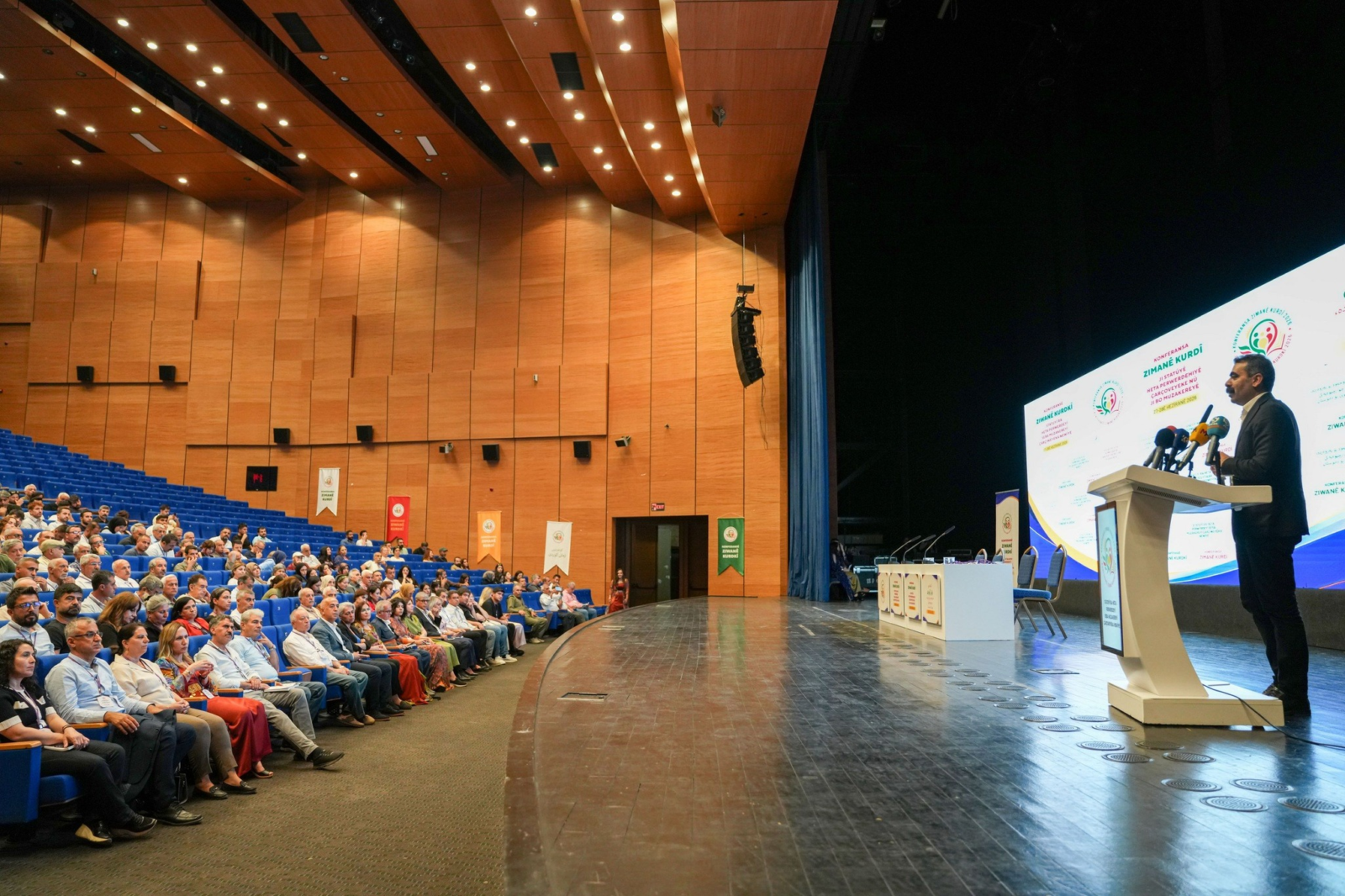
The Kurdish Language Conference in Amed placed mother-tongue rights at the center of the Kurdish question, with speakers warning that lasting peace cannot be built while Kurdish remains limited in public life, education, and local government.
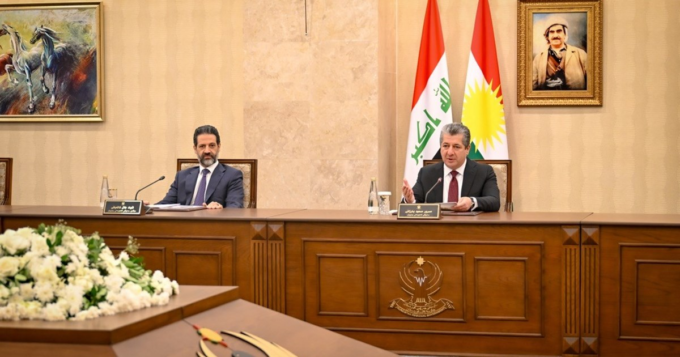
The conference, organized by Democratic Language Institutions, continued on its second day under the slogan “A New Framework for Negotiation: From Status to Education.” The session focused on “The Language of Politics and the Role of Local Governments.”
Silvan Co-Mayor Kadri Esen moderated the session. Speakers included MED-DER executive Dilan Güvenç, DEM Party Deputy Co-Chair Tayip Temel, and Van Metropolitan Municipality Co-Mayor Neslihan Şedal, who was removed from office and replaced by a government-appointed trustee.
Kurdish Language Conference Focuses on Peace and Rights
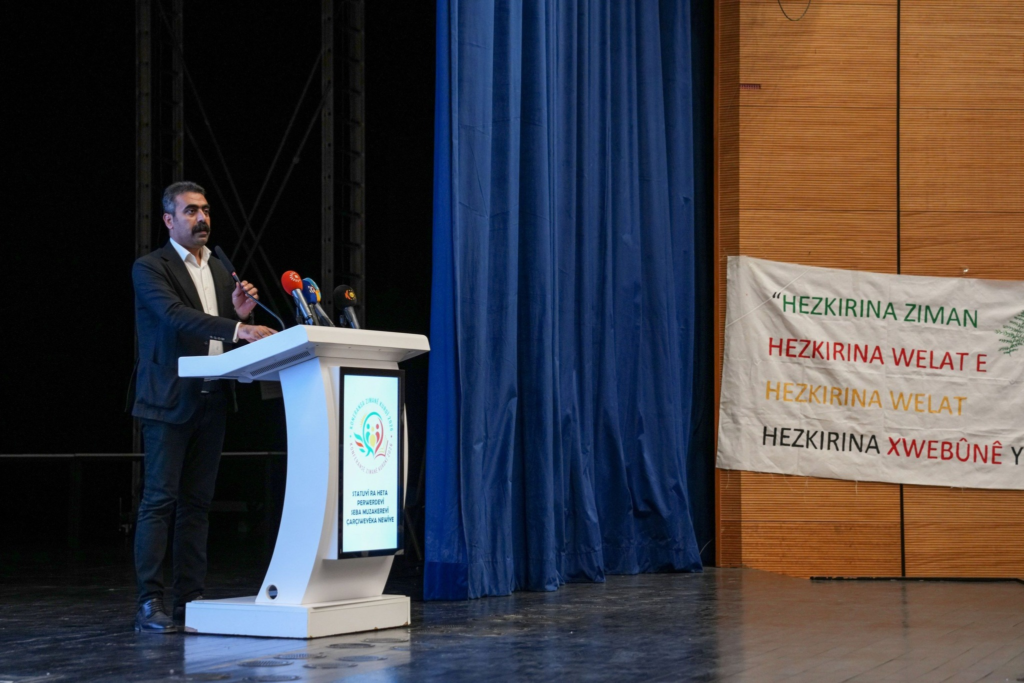
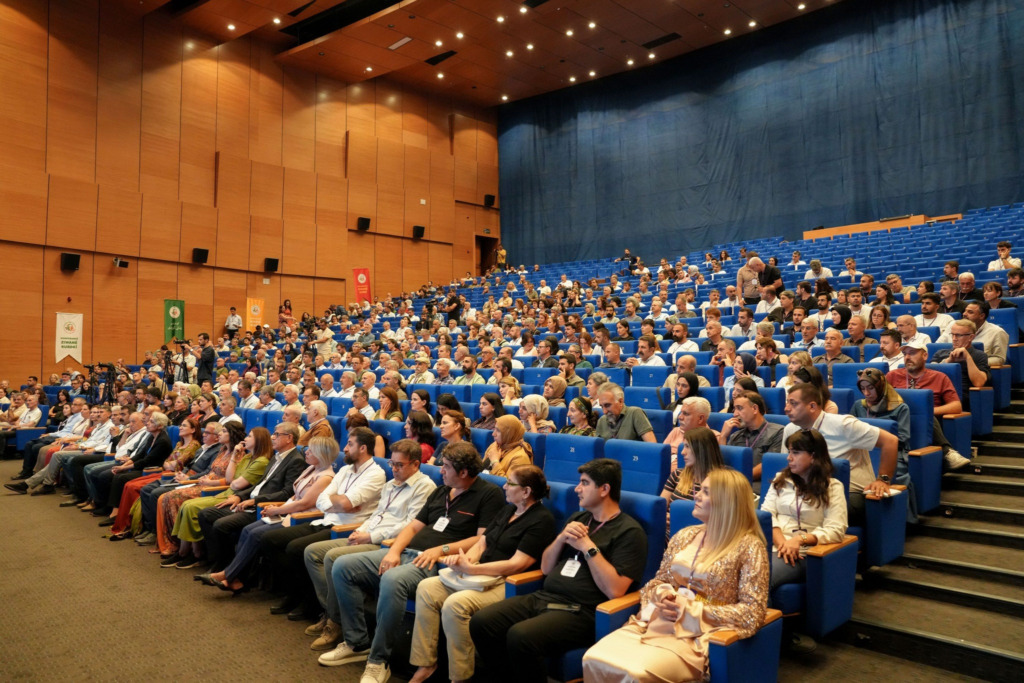
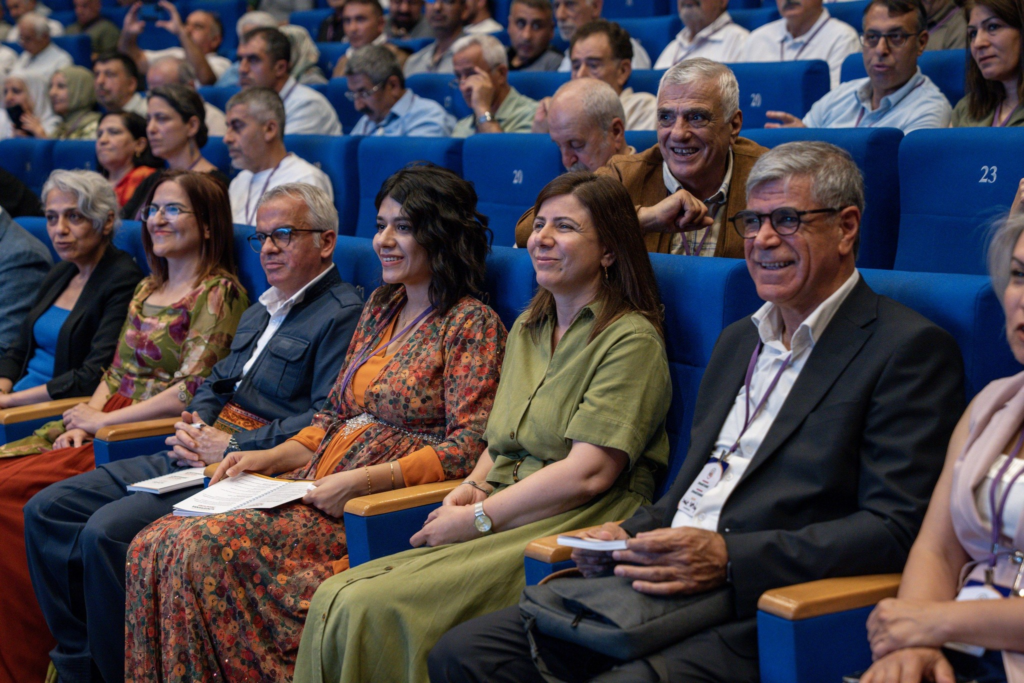
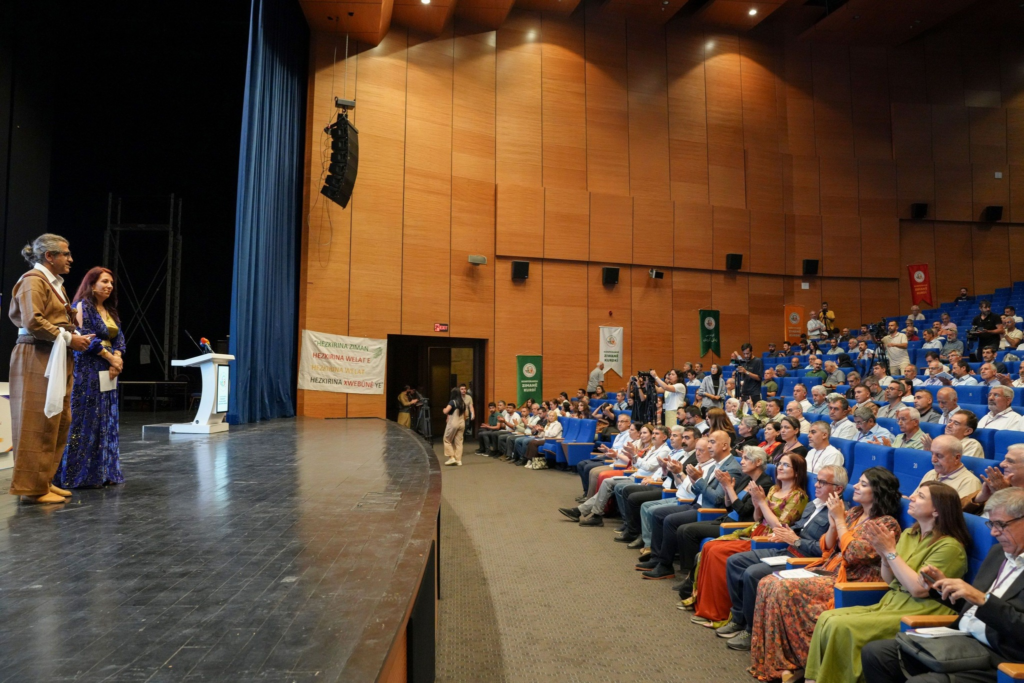
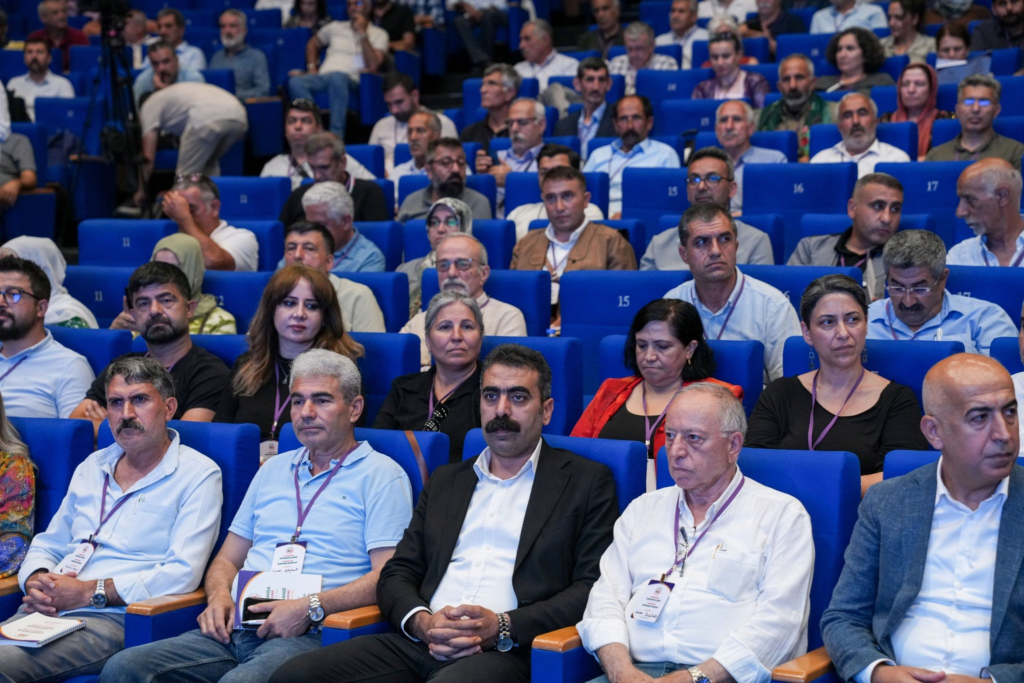
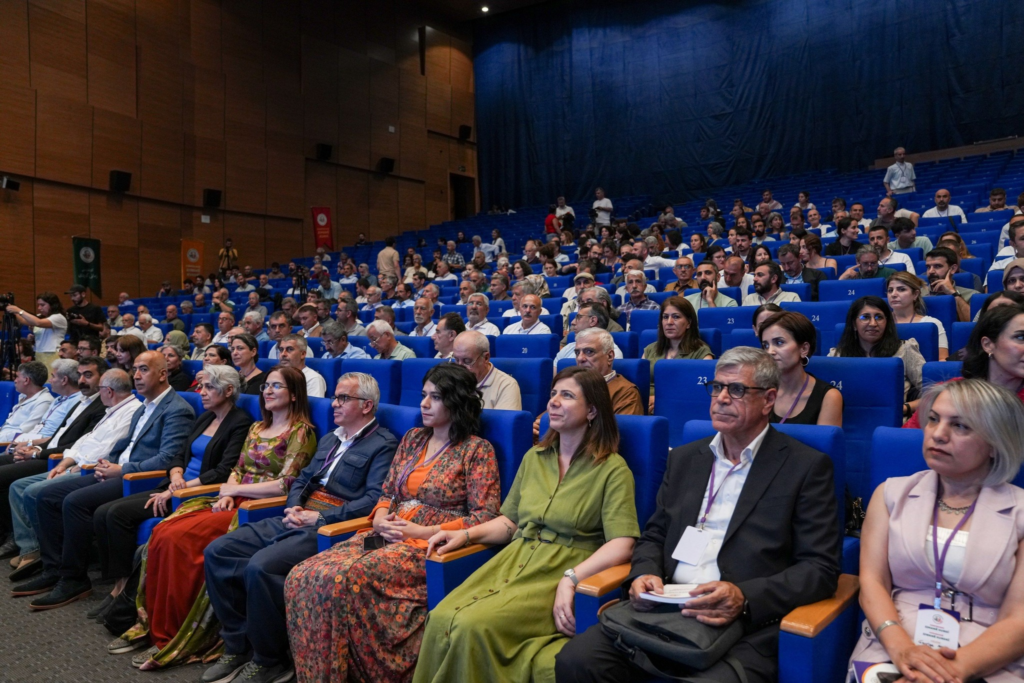
Tayip Temel joined the session online and said the Kurdish language remains one of the deepest issues facing Kurdish society.
“Our greatest pain is our language,” Temel said.
He argued that the Kurdish question cannot be solved without mother-tongue rights. He said Kurdish political movements have defended the language for years, but also admitted that more work is needed to turn awareness into daily practice.
Temel also referred to Abdullah Öcalan’s February 27, 2025 “Call for Peace and Democratic Society.” He said the call should not be read as Kurds giving up language or cultural rights.
“The weapons have been laid down, but the rights have not,” Temel said.
He added that education in the mother tongue and official status for Kurdish are being discussed as part of the İmralı process.
Language Rights Remain Central to the Kurdish Question
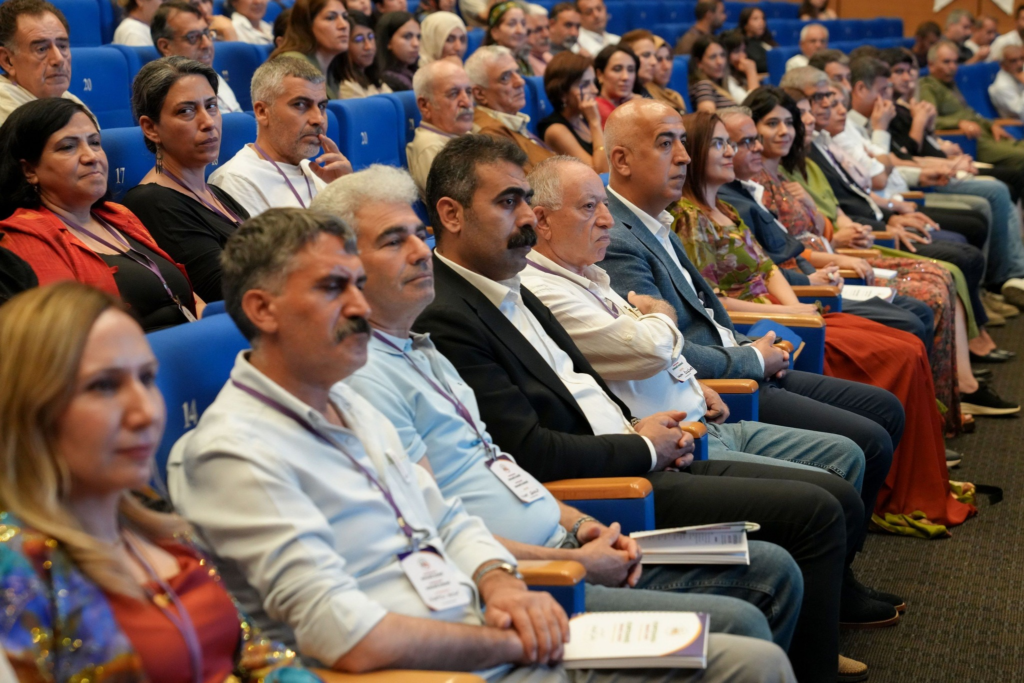
Temel said Öcalan has criticized the lack of action on Kurdish language education. He quoted Öcalan as saying that no Kurdish child should grow up without Kurdish.
The message from the session was clear: peace talks cannot only focus on security. They must also deal with identity, culture, and language.
Temel said language freedom would not harm Turkey. He said it would strengthen the country by allowing Kurds to speak, study, and learn in their own language.
For many Kurdish families, the issue is not symbolic. It affects schools, local services, public signs, cultural memory, and the way children connect with their identity.
Local Governments Urged to Take a Larger Role
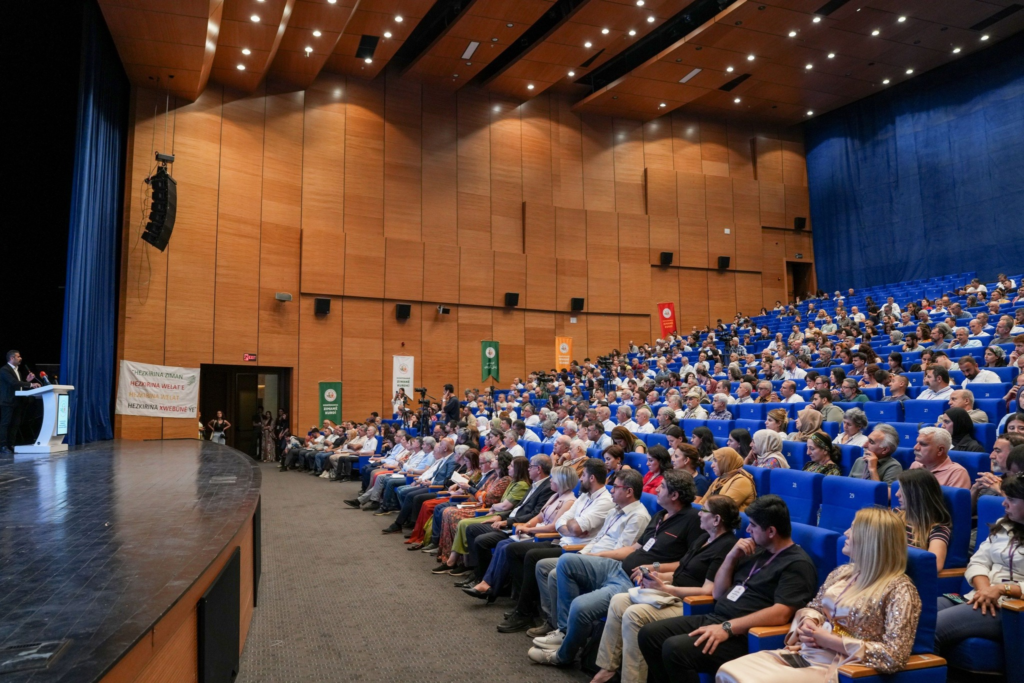
Neslihan Şedal said local governments have a duty to protect diversity. She argued that the nation-state model has often denied this diversity, while democratic local government can help balance central power with local needs.
She said municipalities should create language memory centers, multilingual research centers, and preservation centers.
She also called for language departments and directorates within local government.
“Local governments must take the lead in transforming social consciousness,” Şedal said.
Her comments placed municipalities at the center of the language debate. Local governments can offer multilingual services, support cultural education, and make Kurdish more visible in public life.
Municipal Language Work Needs Stronger Institutions
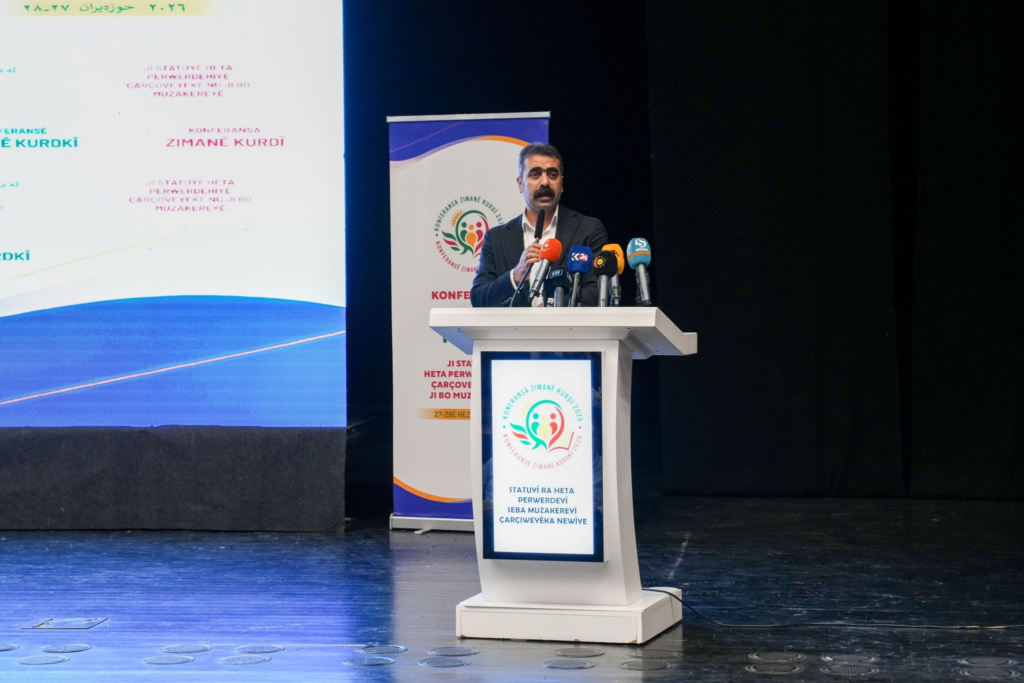
MED-DER executive Dilan Güvenç said municipalities have already taken steps to support Kurdish, but many efforts have not become permanent institutions.
She said municipal services should be multilingual across all fields. This includes public communication, education, digital services, and cultural programming.
Güvenç also called for training programs for teachers. She said the number of Zarokistan centers should grow, along with free educational institutions, cooperatives, and schools.
She also called for digital archives to protect Kurdish culture and language.
Her remarks point to a wider need. Language rights require more than speeches. They need schools, trained staff, public budgets, archives, and daily services.
The Kurdish Language Conference shows that Kurdish language rights remain tied to the larger question of peace.
For Kurdish speakers, the demand is not only about classroom policy. It is about public dignity, cultural survival, and equal citizenship.
The session also showed that local governments may play a key role even when national policy remains limited. Municipalities can help keep Kurdish alive through services, education, archives, and public programs.
The debate is likely to remain central to any future peace process. Without a clear path for Kurdish in education and public life, speakers warned, lasting peace will remain out of reach.