
Rojava security forces arrest tribal leader in Qamishli after authorities said he was involved in an attack targeting Kurdish political symbols, in a case that has drawn attention across northeast Syria. Local security officials said the arrest was carried out early Sunday and linked the incident to efforts to prevent unrest and protect stability in the region.
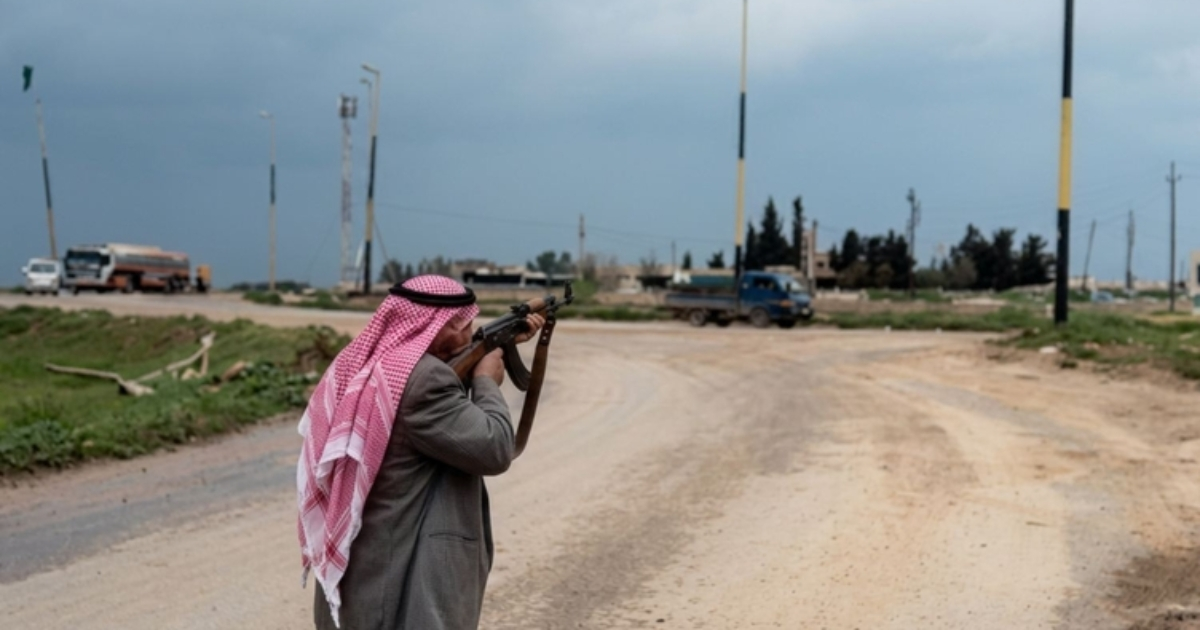
The Internal Security Forces, known as Asayish, said the detainee was Hussein al-Hasou, described as a tribal figure from southern Qamishli. Authorities said he appeared in a video that circulated online showing gunfire directed at the flag of TEV-DEM, the Movement for a Democratic Society, a major Kurdish political umbrella in Rojava.

According to the statement, security forces tracked his movements and arrested him at around 3 a.m. The Asayish said the operation was conducted in coordination with the Syrian interim government’s security bodies, a detail that points to the growing overlap between Kurdish-led security structures and Damascus in parts of northeast Syria.
Officials said early findings suggest the act was meant to fuel tension and create division among the region’s communities. They said the investigation will continue and that further details could be released as the case moves forward.
Rojava Security Forces Arrest Tribal Leader Amid a Changing Security Landscape

The arrest comes at a sensitive time for northeast Syria. Kurdish-led authorities and the government in Damascus have been working through a longer integration process since an agreement reached in March 2025 between SDF commander Mazloum Abdi and Syrian interim President Ahmed al-Sharaa. That deal aimed to fold Kurdish civil and military institutions into the Syrian state, though implementation has moved slowly and at times unevenly.
Related: Drone and Missile Strike Hits Displacement Camp in Erbil, Casualties Reported
In recent months, cooperation on the ground has become more visible. Reports in February said Syrian Interior Ministry personnel entered Hasaka and Qamishli as part of arrangements tied to the ceasefire and the broader understanding with the SDF. Those steps included plans for Asayish and other SDF-linked security bodies to be integrated into the ministry’s structure.
That makes this latest arrest more than a local security story. It also reflects how both sides are trying to show they can manage sensitive incidents together, especially in areas where Kurdish political identity and Arab tribal influence can collide.
Why the Case Matters
Flags and party symbols carry deep political weight in Qamishli and across Rojava. Any public attack on them can quickly become more than an isolated act. It can be seen as a challenge to local authority, a provocation between communities, or a test of the still-fragile relationship between Kurdish-led institutions and the Syrian state.
By moving quickly and publicly announcing the arrest, the Asayish appears to be sending two messages: that attacks on Kurdish symbols will not be tolerated, and that security coordination with Damascus is now active enough to produce results on the ground.
The case may also be watched closely for what comes next. If authorities publish more findings, it could clarify whether the incident was an isolated act or part of a wider attempt to stir disorder during a period of political transition in northeast Syria.