
A new political agreement could soon change the Kirkuk governor post, with a Turkmen figure expected to take office under a broader power-sharing deal involving Kurdish, Sunni Arab, and allied Iraqi factions. Recent reporting indicates the arrangement would end the current phase of PUK control in the disputed province and open a new chapter in Kirkuk’s fragile political balance.
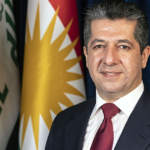
According to multiple reports, the deal centers on Mohammed Samaan of the Iraqi Turkmen Front, who is expected to assume the governorship after an extraordinary Kirkuk Provincial Council session scheduled for Thursday, April 16, 2026. Current governor Rebwar Taha, who is affiliated with the Patriotic Union of Kurdistan, is reportedly expected to step aside if the agreement moves forward.
The reported plan would give the Turkmen side the Kirkuk governor post for a limited period before the office later passes to a Sunni Arab candidate. That would turn the governorship into a rotating post shaped by political bargaining rather than a fixed partisan holding. KirkukNow reported that a prior deal had already outlined a phased transfer of the office after the Kurdish side retained it through the end of 2025.
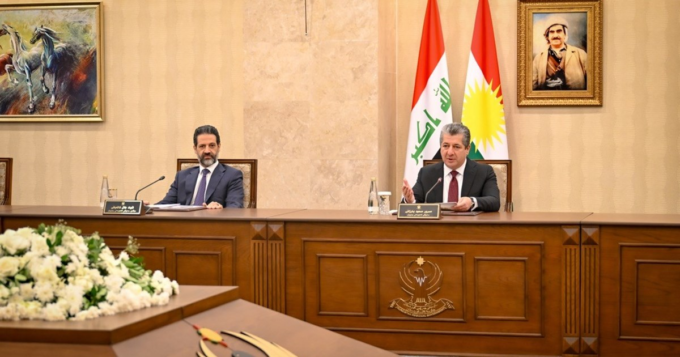
The arrangement appears tied to a wider political understanding between the PUK, the Progress Party, and the Babylon Movement. Kurdistan24 reported that Bafel Talabani, Mohammed al-Halbousi, and Rayan al-Kildani were all part of the deal, with the PUK expected to retain influence through other administrative and security positions even if it gives up the governorship. Those positions reportedly include the deputy governor’s office, the Kirkuk police chief role, and other local posts.
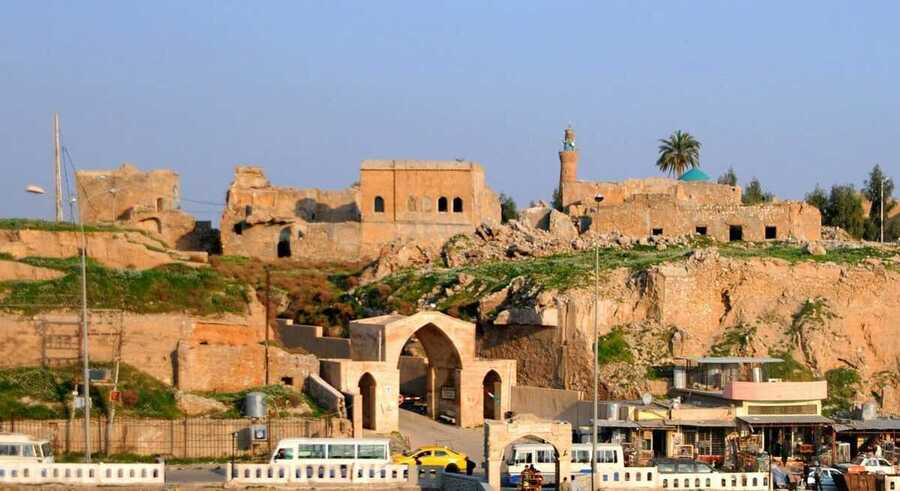
That matters because Kirkuk is not a normal province in Iraq’s political map. It is one of the country’s most contested territories and remains disputed under Article 140 of the Iraqi constitution. Control of the Kirkuk governor office carries political weight far beyond local administration because the province sits at the center of long-running Kurdish, Arab, and Turkmen claims.
The shift would also mark a historic change. The New Region reported that Mohammed Samaan’s appointment would make him the first Turkmen to hold the post in the modern era after 2003. That would give the move strong symbolic value as well as political value in a province where representation is closely watched by all sides.
Still, the transition was not fully confirmed as of April 14. Rudaw reported that Rebwar Taha said he had not been officially informed that he would step down and that he had only heard about the issue through the media. A later report from The New Region said the governor’s office also denied that any formal resignation letter had yet been submitted, while still indicating commitment to any final PUK leadership decision.
That leaves some uncertainty around timing, candidate confirmation, and the exact structure of the rotation. KirkukNow also noted that while Mohammed Samaan is widely seen as the leading choice, Turkmen officials have indicated their side was still finalizing its nominee.
Even with those open questions, the direction is clear. The reported deal suggests that the Kirkuk governor issue is now being handled as part of a broader national bargain tied to Baghdad’s power-sharing system, alliances inside parliament, and the balance between Iraq’s major ethnic and political blocs. In Kirkuk, local government rarely moves without national calculations behind it.
For Kurdish parties, the development may reflect a tactical shift. Rather than holding the governorship at all costs, the PUK appears to be trading the office for continued leverage in security and local administration. For Turkmen parties, it would be a long-sought breakthrough. For Sunni Arab actors, the later handover would give them a path to the same office under the same arrangement.
The next council session will likely decide whether the agreement becomes official. If it does, the Kirkuk governor post will become the clearest sign yet that the province’s future is being shaped through negotiated rotation rather than outright control by one bloc.