
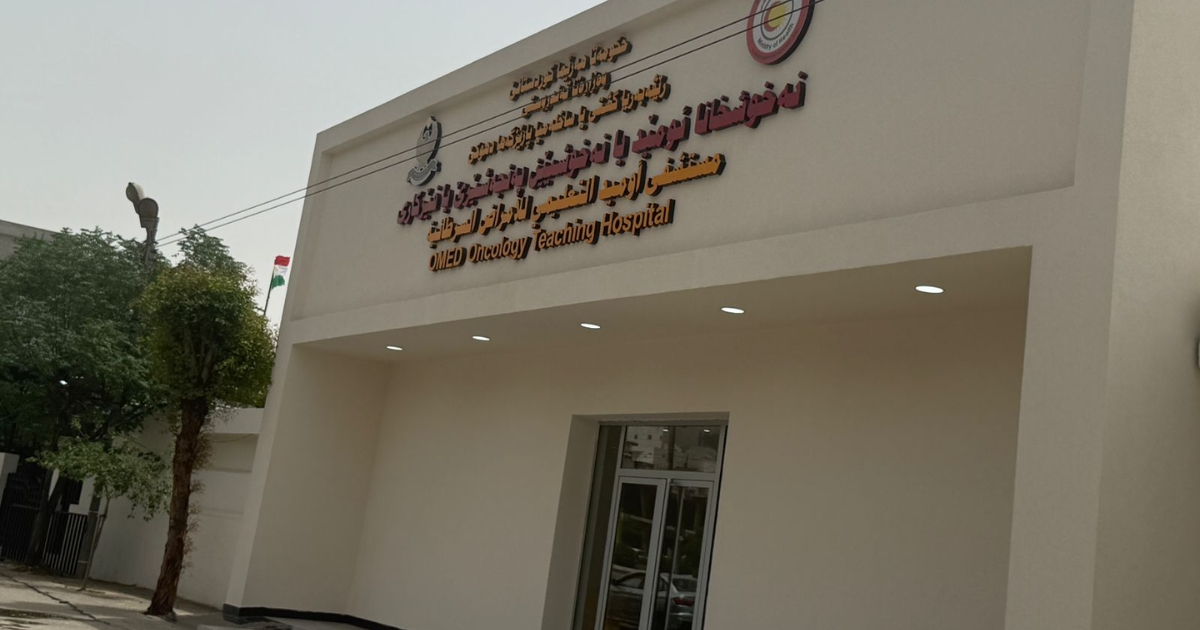
The Duhok cancer hospital has received about 30,000 patient visits since opening in May 2025. That number should be read in two ways. It shows progress in expanding cancer care. It also shows how much pressure the health system now faces.
Omed Oncology Hospital was built to serve patients in Duhok and reduce the load on older services. Since opening, officials say it has provided more than 8 billion Iraqi dinars, or over $6 million, in medical services.
Not every patient who visited the hospital was diagnosed with cancer. Many came for testing, diagnosis, prevention, and follow-up care. That detail matters. It shows that cancer care is not only about treatment. It is also about early detection, public awareness, and access to doctors before a disease reaches a later stage.
Still, the numbers are large.
Patient Demand at Omed Oncology Hospital
| Measure | Figure |
|---|---|
| Opening date | May 2025 |
| Patient visits since opening | 30,000 |
| Value of services provided | More than 8 billion IQD |
| Hospital capacity | 160 beds |
| Previous chemotherapy capacity in Duhok | 40 to 45 beds |
| Radiotherapy center in Duhok | Not yet available |
The Duhok cancer hospital has clearly increased local treatment capacity. The move from 40 to 45 chemotherapy beds to a 160-bed oncology hospital is a major change for the province.
But capacity is not only about beds. Cancer care needs trained doctors, nurses, diagnostic tools, transport, medicine, and machines that can deliver treatment on time.
That is where the concern begins.
Hospital officials say Omed still needs more staff, equipment, and vehicles. Duhok also does not yet have a radiotherapy center. Officials say a project is underway to build one.
This is not a small gap. Radiotherapy is one of the main pillars of cancer treatment. The World Health Organization and the International Atomic Energy Agency have said that more than half of cancer patients may need radiotherapy during treatment. Access remains limited in many lower- and middle-income health systems.
For patients, this gap can mean travel. It can mean more cost. It can mean delay. It can also mean stress for families who are already dealing with one of the hardest moments in life.
Cancer Cases Are Rising in the Kurdistan Region
According to Rudaw’s monitoring, newly recorded cancer cases in the Kurdistan Region rose from 6,293 in 2020 to 10,245 in 2025. That is a 62 percent increase over five years.
| Year | Newly Recorded Cancer Cases |
|---|---|
| 2020 | 6,293 |
| 2025 | 10,245 |
This increase does not automatically mean cancer itself is rising at the same rate. Better testing, more awareness, and improved reporting can also raise recorded numbers. But either way, the result is the same for hospitals: more patients are entering the system.
Breast cancer remains the most common cancer type in the Kurdistan Region, according to the same reporting.
That point should push health authorities toward stronger screening programs, especially for cancers where early detection can save lives. The WHO says early diagnosis and screening programs should be built with enough treatment capacity behind them, so patients are not diagnosed early only to face long delays.
Why Outside Examples Matter
Duhok’s situation is not unique. Many health systems face the same pattern. A hospital opens. Demand rises fast. Then the real challenge begins: staffing, equipment, maintenance, referral systems, and early detection.
In many countries, cancer treatment gaps are not caused by one missing hospital. They are caused by a chain of missing services.
A patient may need screening, scans, lab work, surgery, chemotherapy, radiotherapy, medicine, transport, and follow-up. If one part of that chain is weak, the whole process slows down.
International studies on cancer care in lower- and middle-income settings often point to the same issue: early detection helps only when patients can then reach treatment without delay.
Related: Galyawa Medical Centre Provides Free Healthcare to More Than 50,000 Patients in Erbil
Radiotherapy is also a global concern. Research has found that access to radiation treatment remains uneven, especially in countries and regions with limited machines, trained staff, and maintenance systems.
That comparison matters for Duhok because building a radiotherapy center is not only about buying equipment. It also requires trained teams, safety systems, maintenance plans, and reliable funding.
The Main Question for Duhok
The opening of Omed Oncology Hospital is a clear step forward. It gives Duhok a larger cancer care base. It also gives patients more local access than before.
But the 30,000 patient visits since May 2025 raise a serious question.
Can the system grow fast enough to match demand?
The answer will depend on what happens next. More staff will be needed. More equipment will be needed. Screening centers must open. The radiotherapy project must move forward. Patients also need clear referral paths so they are not left moving between hospitals on their own.
The Duhok cancer hospital is now doing more than treating patients. It is showing the size of the cancer care challenge in the Kurdistan Region.
The hospital’s first year should be seen as both a success and a warning. The success is that more patients can now seek care in Duhok. The warning is that demand is already high, and cancer services cannot depend on hospital beds alone.
If the Kurdistan Region wants to reduce the burden of cancer, it needs a full system. That means early screening, strong diagnosis, local treatment, radiotherapy access, trained staff, patient transport, and long-term funding.
Omed Oncology Hospital has opened the door. The next test is whether the health system can build around it.