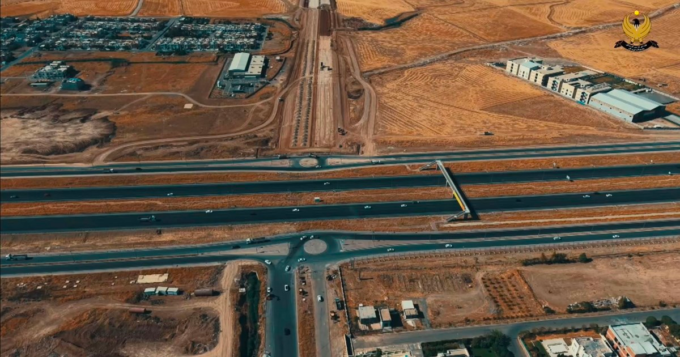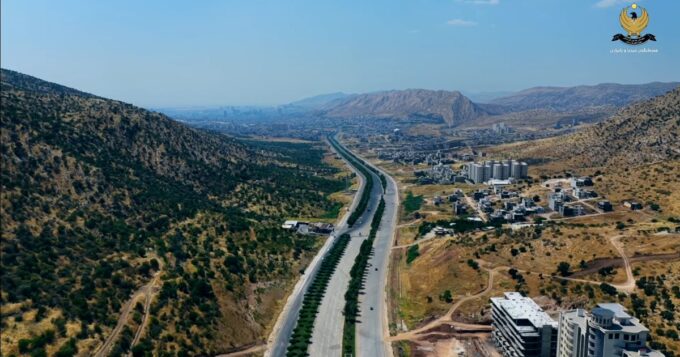

The Bestana–Khalakan–Dukan Road Project is moving forward as one of the Kurdistan Region’s major infrastructure works, with a total budget of IQD 243 billion.
The project is part of the Kurdistan Regional Government’s wider plan to improve road safety, reduce travel pressure, and strengthen transport links between Slemani, the Raparin Independent Administration, and Dukan District.
Once completed, the route will be upgraded into a modern dual carriageway. This is expected to make travel safer and faster for citizens, workers, tourists, and commercial drivers who use the road.
Related: First Successful Phase of the Erbil Green Belt Project Nears Completion
The Bestana–Khalakan–Dukan Road Project is important because it connects areas that rely on daily movement for work, trade, education, health care, and tourism.
Dukan is also one of the Kurdistan Region’s key tourism areas. Better road access could help local businesses, hotels, restaurants, and transport services. It may also reduce pressure on older roads that were not designed for today’s traffic levels.
For residents, the project could mean shorter trips and fewer delays. For drivers, the dual carriageway design should help reduce traffic risks, especially during peak travel periods and holiday seasons.
Main Construction Work Under Way for Bestana–Khalakan–Dukan Road Project
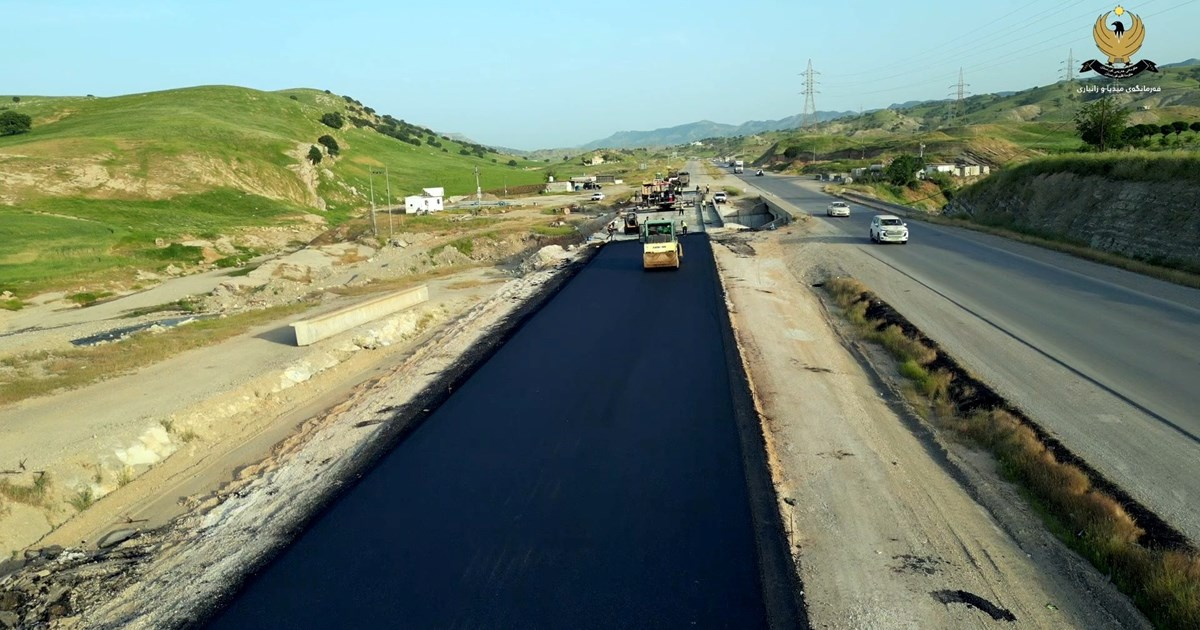
Large-scale construction is now active along the route.
The project includes excavation, cutting, and land levelling across 2.5 million square metres. Asphalt paving will cover 840,000 square metres.
The road foundation is also being strengthened with 800,000 cubic metres of sub-base material and 300,000 cubic metres of crushed stone.
These works are central to the long-term quality of the road. Strong foundations matter in mountainous and high-traffic areas, where rain, heavy vehicles, and slope conditions can affect road durability.
Drainage and Culvert Systems Added
The project also includes 2,000 metres of drainage and culvert systems.
This part of the work is important because poor drainage can damage roads over time. Rainwater can weaken the road base, cause surface cracking, and create unsafe driving conditions.
By adding drainage systems, the project aims to protect the route and reduce water buildup during wet seasons.
Frizala Village Bridge to Ease Traffic
A key part of the Bestana–Khalakan–Dukan Road Project is the Frizala Village Bridge.
The bridge will be 380 metres long and 15 metres wide. It is expected to reduce congestion and help shorten journey times.
Bridge construction is often one of the most important parts of a road project. It can remove difficult traffic points, improve flow, and support safer movement across challenging terrain.
Construction teams remain active on site. About 17 percent of the project has been completed so far.
Work on the remaining phases is continuing according to schedule, with the goal of opening the road for public use as soon as possible.
The project’s progress will be closely watched by residents and drivers who depend on this corridor. For many communities, the road is more than a transport route. It is a link to jobs, services, markets, and tourism activity.
The Bestana–Khalakan–Dukan Road Project reflects the growing need for stronger infrastructure in the Kurdistan Region.
As traffic increases, older road networks face more pressure. Modern dual carriageways can help reduce accidents, improve travel time, and support economic growth.
The project also raises a wider question for infrastructure planning: how can major roads be built not only faster, but also with long-term maintenance in mind?
A road of this size needs strong construction, drainage, safety barriers, clear signs, and regular maintenance after completion. These details will decide how well the project serves citizens in the years ahead.
For now, the Bestana–Khalakan–Dukan route stands as one of the region’s key infrastructure projects. Its completion could bring major benefits to Slemani, Raparin, Dukan, and the wider Kurdistan Region.