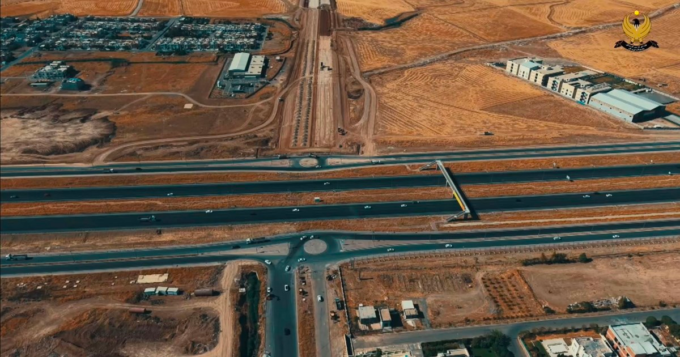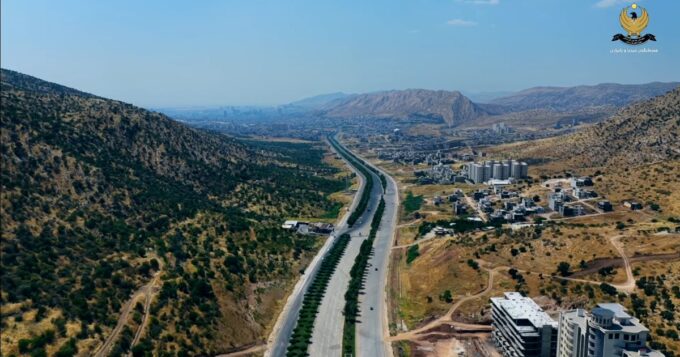

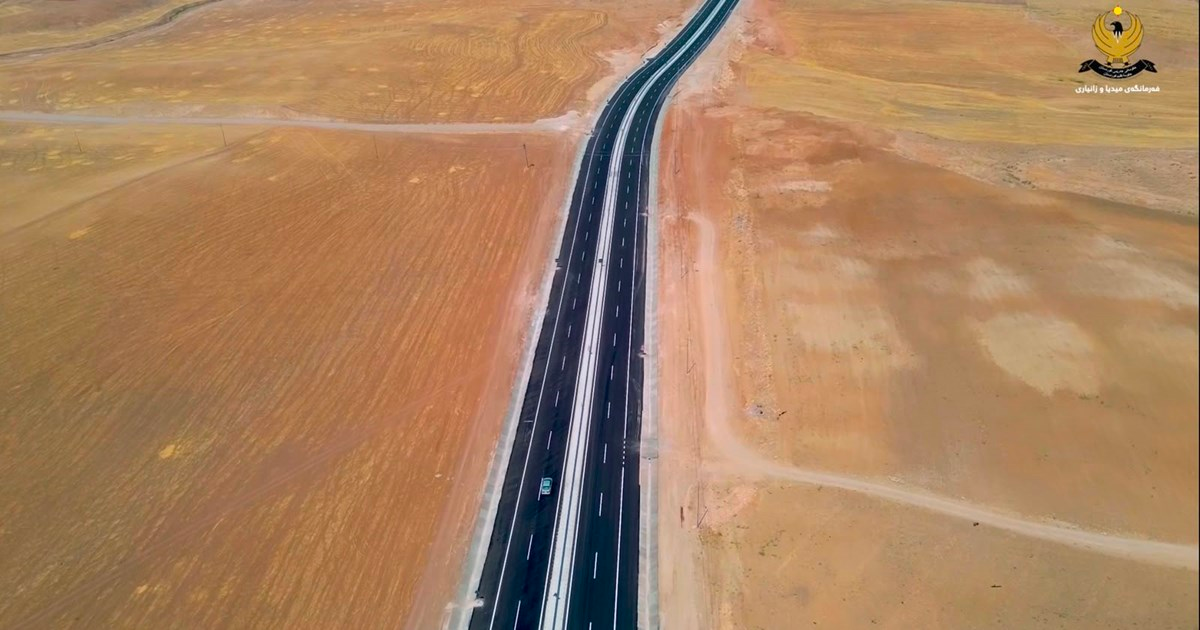
The Artery of Development is taking shape across the Kurdistan Region as the Kurdistan Regional Government expands road construction, highway upgrades, and traffic safety projects.
Between 2019 and 2026, the KRG completed 810 road and highway projects. These projects covered 3,055 kilometres of roads and cost IQD 1.057 trillion.
The work included new road construction, rehabilitation, and service improvements across the region. The goal is to improve daily travel, support trade, reduce transport delays, and connect cities, towns, villages, and markets.
Roads remain one of the most important parts of public infrastructure. Strong road networks help people reach schools, hospitals, workplaces, and businesses. They also help farmers, traders, tourists, and investors move more easily across the region.
The KRG has described the road sector as the Artery of Development because roads shape how the economy grows. Better roads can cut travel time, reduce vehicle damage, and make movement safer for citizens.
Why the Artery of Development Matters
The Artery of Development matters because roads are not only about traffic. They affect the economy, public safety, tourism, health access, and daily life.
A strong road network helps goods move faster. It helps workers reach jobs. It helps students reach schools. It helps patients reach hospitals. It also helps businesses reach new markets.
This is why transport infrastructure is often treated as a core part of development around the world. The World Bank has said transport systems connect people to jobs, markets, and essential services. The Asian Development Bank has also linked better transport systems to lower travel costs, shorter travel times, and stronger development.
For the Kurdistan Region, this has direct importance. Better roads can improve movement between Erbil, Duhok, Slemani, Halabja, Raparin, Garmiyan, and border areas. They can support trade, tourism, agriculture, construction, and emergency response.
Related: Bestana–Khalakan–Dukan Road Project Advances with IQD 243 Billion Budget
The issue is also practical. Many roads in the region carry private cars, buses, heavy trucks, and tourist traffic. Without expansion and maintenance, these roads become slower, less safe, and more costly for citizens.
That is why the Artery of Development should be measured not only by kilometres built, but by how much it improves daily life.
Major Road Projects Move Forward
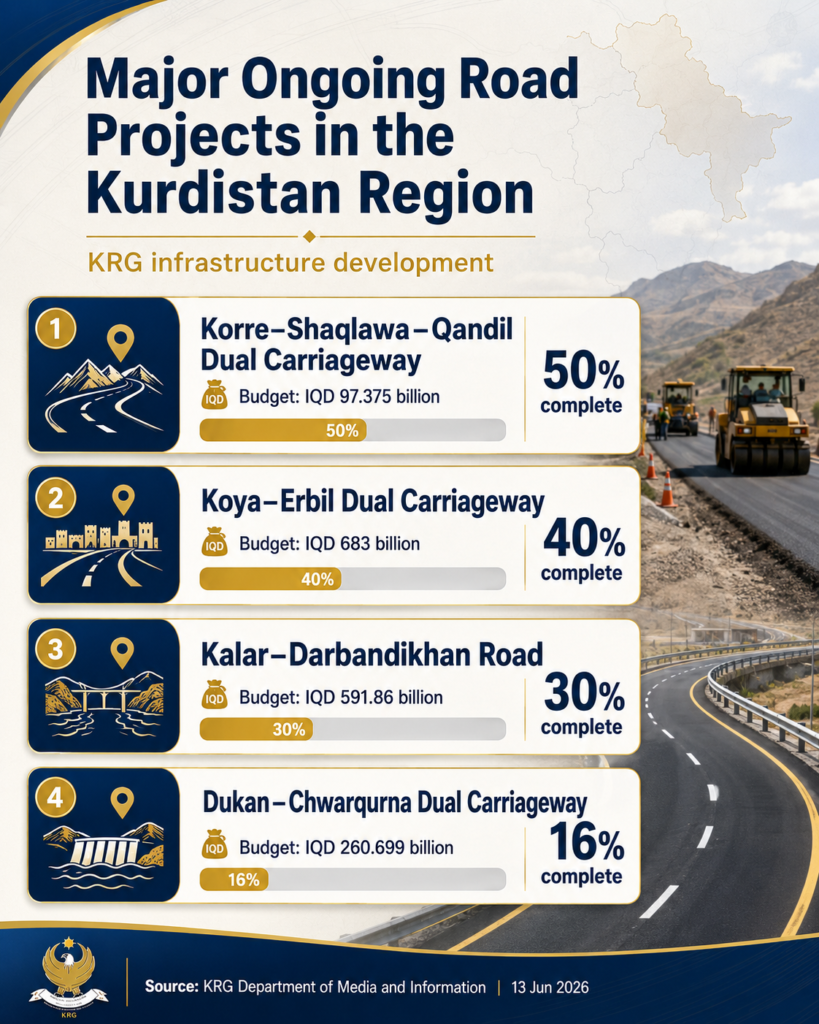
Alongside completed projects, the KRG says 227 strategic road projects are now under implementation. Once finished, these projects will add 2,239 kilometres of newly built and rehabilitated roads.
The total cost of these ongoing projects is IQD 4.179 trillion.
Several major projects are now moving forward across the Kurdistan Region.
The Korre–Shaqlawa–Qandil Dual Carriageway has a budget of IQD 97.375 billion and is 50 percent complete.
The Koya–Erbil Dual Carriageway has a budget of IQD 683 billion and is 40 percent complete.
The Kalar–Darbandikhan Road has a budget of IQD 591.86 billion and is 30 percent complete.
The Dukan–Chwarqurna Dual Carriageway has a budget of IQD 260.699 billion and is 16 percent complete.
These projects are expected to improve movement between key areas. They also support tourism, local business, and access to public services.
Completed and Ongoing Road Projects
A chart should compare the 810 completed road and highway projects with the 227 strategic road projects now under implementation.
This shows the scale of work already completed and the next phase of construction still ahead.
Chart Data
| Project Status | Number of Projects |
|---|---|
| Completed road and highway projects | 810 |
| Strategic projects under implementation | 227 |
Kilometres of Roads Completed and Underway
A second chart should compare the length of completed roads with the length expected from ongoing projects.
The KRG completed 3,055 kilometres of roads between 2019 and 2026. Ongoing projects are expected to add another 2,239 kilometres.
Chart Data
| Project Status | Kilometres |
|---|---|
| Completed roads | 3,055 km |
| Roads under implementation | 2,239 km |
Major Ongoing Road Projects by Budget
A third chart should compare the budgets of the major ongoing projects.
The Koya–Erbil Dual Carriageway has the highest budget among the listed projects, followed by the Kalar–Darbandikhan Road.
Chart Data
| Project | Budget |
|---|---|
| Koya–Erbil Dual Carriageway | IQD 683 billion |
| Kalar–Darbandikhan Road | IQD 591.86 billion |
| Dukan–Chwarqurna Dual Carriageway | IQD 260.699 billion |
| Korre–Shaqlawa–Qandil Dual Carriageway | IQD 97.375 billion |
Outside Examples Show Why Roads Matter
The Kurdistan Region is not alone in treating roads as part of long-term development.
In Iraq, the World Bank approved $900 million in financing in June 2026 for the Iraq Transport Economic Corridors project. The project aims to improve road infrastructure, make travel safer and more reliable, and create opportunities for people and businesses.
This example matters because it shows how road projects are now seen as economic corridors. They are not only local service works. They are links between markets, cities, border crossings, and future jobs.
The Asian Development Bank has taken a similar view in Asia and the Pacific. It says transport systems should improve access and mobility for people and goods while reducing travel times and costs.
These outside examples support a clear point: road investment works best when it connects people to opportunity.
For the Kurdistan Region, that means road projects should support trade routes, local markets, tourism areas, farming communities, border movement, and public services.
Road Safety Is Part of Development
The Artery of Development is not only about building more roads. It is also about making roads safer.
During this period, the KRG carried out several traffic safety measures. These included line marking on 2,723 kilometres of roads.
Authorities also installed 19,342 traffic signs and 62 kilometres of guardrails. In addition, 59 pedestrian bridges were built to help protect people crossing busy roads.
These measures are important because road safety remains a serious public concern. Clear road markings, signs, guardrails, and pedestrian bridges can help reduce confusion and save lives.
The World Health Organization says speed plays a major role in both crashes and crash severity. It says every 1 percent increase in average speed raises fatal crash risk by 4 percent.
That makes road design, traffic signs, crossings, speed control, and maintenance essential parts of any road plan.
For many families, road safety is not just an infrastructure issue. It is a daily concern. Better roads must also mean safer travel.
Funding Comes from Three Main Sources
Road construction and rehabilitation projects have been funded through three main sources.
The first source is the investment budget, which supports large infrastructure projects.
The second is the regular budget of the KRG Ministry of Construction and Housing.
The third is the allocation of 30 percent of revenues from weigh stations. These funds are used for road rehabilitation and maintenance.
This funding model shows that road development depends not only on new construction, but also on long-term maintenance.
Without maintenance, even major road projects can lose value over time.
Kurdish Weekly Analysis
The road program is one of the clearest signs of long-term planning in the Kurdistan Region.
Roads are not only concrete and asphalt. They are economic links.
When roads improve, small businesses can reach more customers. Farmers can move goods faster. Tourists can reach mountain areas with less risk. Families can travel between cities with more confidence. Emergency services can respond faster.
But the real test is not only how many kilometres are built. The real test is quality, safety, transparency, and maintenance.
The KRG should publish clear progress updates on major road projects. It should also explain timelines, safety targets, maintenance plans, and final costs.
Citizens should know which projects are finished, which are delayed, and which roads need repair.
The Artery of Development can become one of the strongest public investment stories in the Kurdistan Region. But it must be measured by impact, not only by project numbers.
A strong road network should make life easier, safer, and more productive for ordinary people.
That is why this story matters.