

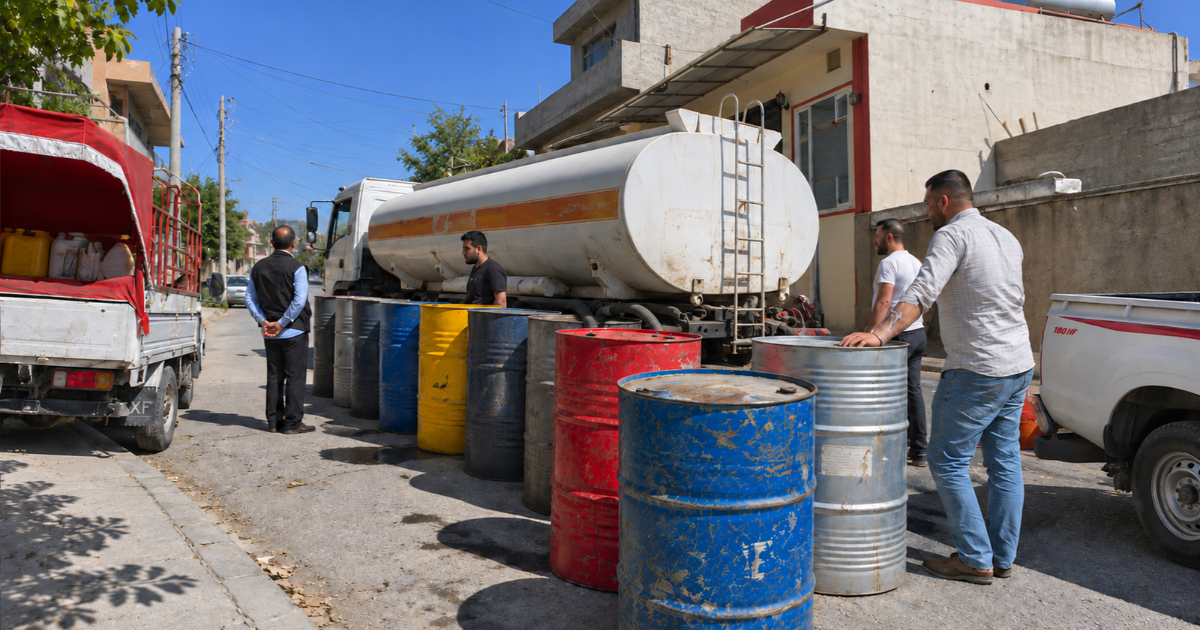
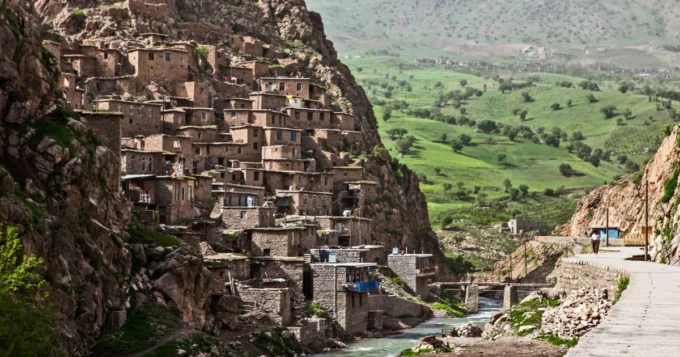
Kerosene deliveries to mountain homes in Erbil (Hawler) province will start on Thursday, November 19, Governor Omed Khoshnaw said. Families in remote areas will receive the subsidized heating fuel first. Deliveries to the rest of the province will follow.
Five kerosene tankers reached Erbil on Wednesday morning. Each can carry 36,000 litres. Crews had begun unloading them that day, Deputy Governor Hemen Qadir told Kurdistan24.
Why Mountain Homes Will Get Kerosene First
Winter sets in earlier in the mountains, Khoshnaw told Kurdistan TV. Families there need fuel sooner to heat their homes.
At a news conference on Wednesday, Khoshnaw said the federal allocation would cover about 14% of Erbil province’s residents. He said the province would make other arrangements to reach the remaining households.
The shipment follows an agreement between Iraq’s Oil Ministry and the Kurdistan Regional Government’s Ministry of Natural Resources. Baghdad approved 50 million litres of kerosene for the Kurdistan Region as a whole.
What Families Will Pay for Kerosene
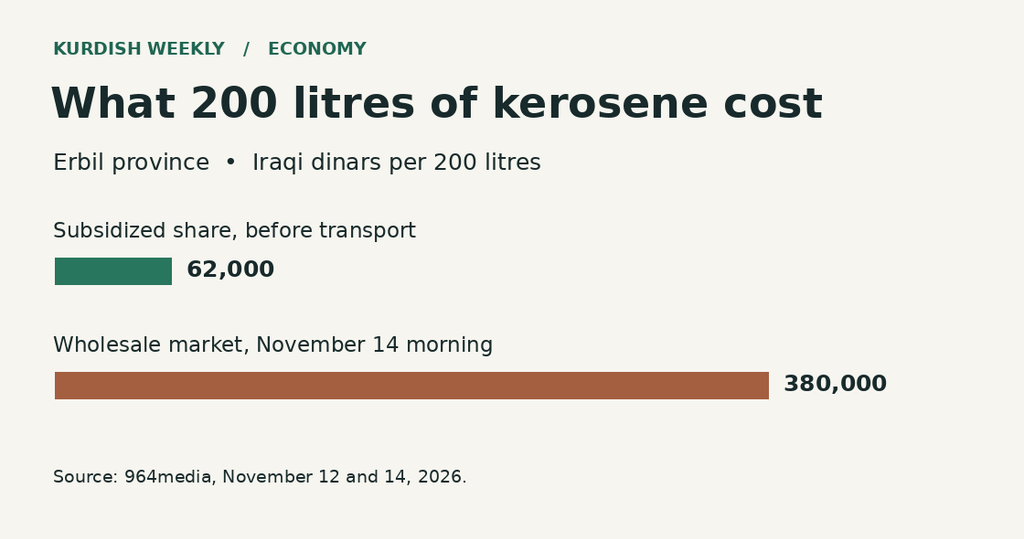
A household share of 200 litres will cost 62,000 Iraqi dinars before transport, according to Falah Sayed Mawlud, the regional oil and minerals director. That works out to 310 dinars per litre. Families will also pay the cost of moving the fuel to their area.
On November 14, Erbil trader Sherwan Ahmed told 964media that a 200-litre barrel sold for 380,000 dinars at the wholesale market that morning. Home delivery brought the price to 400,000 dinars. Traders cut the wholesale price later that day, he said.
At that morning’s wholesale rate, a family buying 200 litres would have paid 318,000 dinars more than the subsidized price, before transport. The market figures give a snapshot of prices five days before the planned start of deliveries.
How Far the Winter Supply Will Go
Erbil shares the federal kerosene supply with Duhok, Slemani and Halabja. Mawlud told Al-Sabah that the region needs about 269 million litres for the winter. The 50 million litres that Baghdad approved would meet less than a fifth of that demand.
At 200 litres per home, the federal supply would give 250,000 households one share each across the four provinces. That leaves a gap of about 219 million litres against the ministry’s estimate. Mawlud said his ministry would ask Baghdad for more.
Families Weigh the Cost of Waiting
Some families buy kerosene a can at a time. Resident Sarhad Mohammed told Rudaw that he saw one man ask how much a single can would cost. After working out the price, the man left the shop without buying it.
Barrel sizes can also vary. Traders who spoke to Rudaw quoted about 345,000 dinars for a 220-litre barrel of commercial heating oil, up from about 170,000 dinars a year earlier. That barrel holds 20 litres more than the share households can buy through the subsidy.
How This Winter Compares With Last Year
Last winter, the regional government also sent kerosene to high-altitude areas first. It set the price at 103,500 dinars for 200 litres. This winter’s announced price for the same volume is 41,500 dinars lower, before households add their transport costs.
By January 4, 2026, the Ministry of Natural Resources said 674,501 families had received fuel under the earlier programme. More than 415,000 other households were still waiting. A separate federal supply reached cities that January at 31,000 dinars for 100 litres.
On September 21, Iraq’s parliament asked the government to secure enough kerosene for the region before winter. On November 1, Prime Minister Ali al-Zaidi ordered the release of the region’s share. Iraq’s Oil Ministry then asked the state fuel company to speed up deliveries. The governor’s November 18 announcement gave mountain households in Erbil a start date.
For more on household energy costs, see Kurdish Weekly’s report on July electricity bills for Runaki households.










Leave a comment