
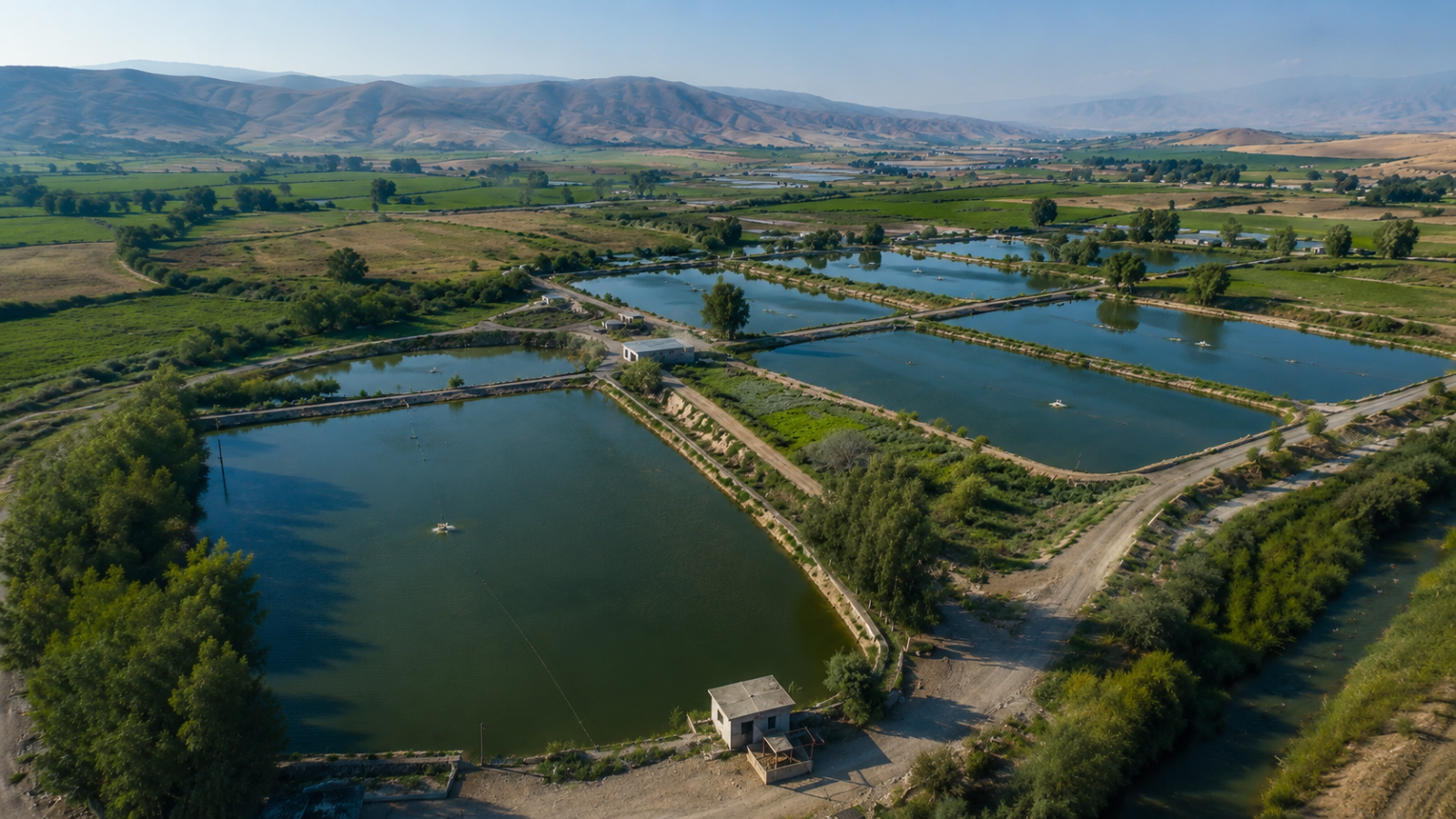
uthorities have launched a campaign targeting unlicensed Slemani Fish Farms as part of efforts to enforce regulations across the Kurdistan Region’s fish farming sector.
The campaign is being carried out with support from security forces and local administrative bodies. It focuses on projects that operate without official approval or fail to meet legal requirements.
Jutyar Khalid, deputy director of agriculture in Slemani, said most fish farms in the province do not hold valid licenses.
He said many projects also fail to comply with Instruction No. 9 of 2021, which regulates the establishment and operation of fish farms.
Few Slemani Fish Farms Hold Valid Licenses
Slemani has more than 600 fish farming projects. Only about 40 hold valid licenses, according to local agriculture officials.
Authorities have referred several operators to the courts under Law No. 3 of 2018, which addresses illegal land use and encroachments.
The campaign aims to place fish farming projects under formal oversight. Licensed farms must follow rules linked to land use, water access, environmental standards, and daily operations.
Officials have not announced how long the campaign will continue or how many farms may face closure.
Slemani Leads Fish Production in the Kurdistan Region
The licensing problem extends across the Kurdistan Region.
The region has about 2,300 fish farms and ponds. Only 480 are officially licensed, according to the Kurdistan Region’s Directorate of Fish Resources.
The sector produces about 37,000 metric tons of fish each year.
Slemani accounts for more than 15,000 tons of that total. This makes it the largest fish-producing province in the Kurdistan Region.
The campaign against unlicensed Slemani Fish Farms could affect a large part of the province’s fish production. It may also push farm owners to apply for licenses and meet regional standards.
Officials say the campaign is focused on enforcing existing laws and improving oversight of a sector that supports food production and local jobs.